The Long-term Effects of Short-term Medical Decisions: A parent's story of NEC, the NICU and Short Bowel Syndrome
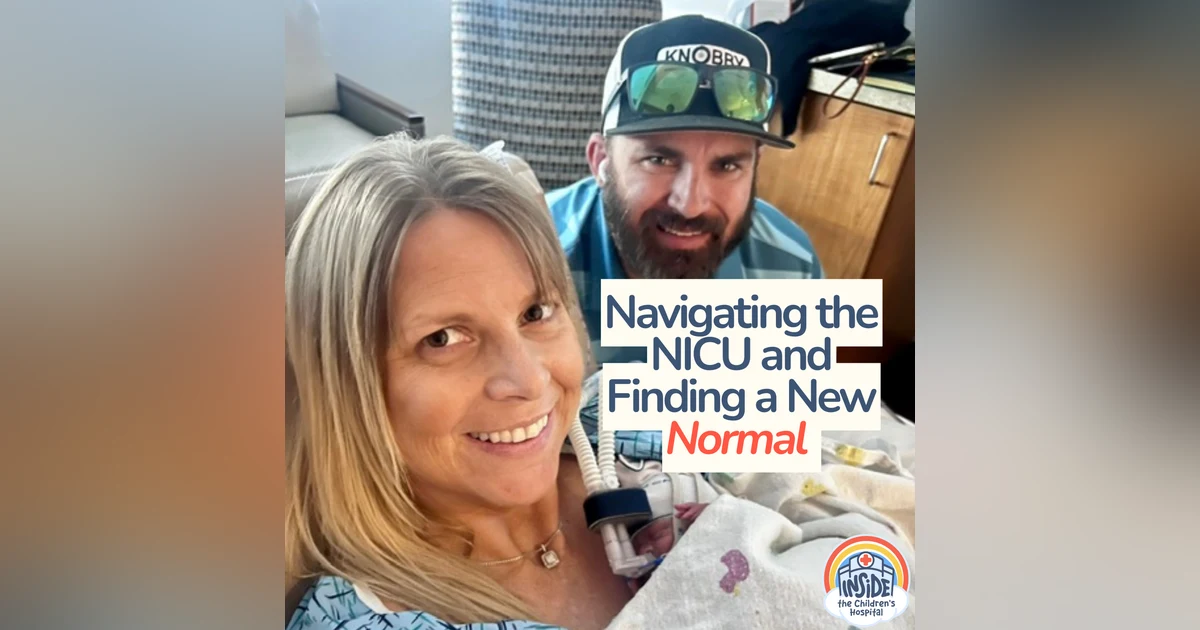


Welcome back to NICU Awareness Month. In this episode, Katie is sitting down with Kim Holland, mom of Tripp who was born at 27 weeks and also developed NEC. NEC, or Necrotizing Enterocolitis, is the inflammation of the intestine that often leads to the death of intestinal tissue/lining, which caused Tripp to undergo multiple surgeries and spend months in the NICU.
Kim delves into the raw emotions she went through during her pregnancy with Tripp and his stay in the NICU as she had to make tough medical decisions. She also gives us some insight into how she coped and was ultimately able to create a new normal after the NICU. Katie and Kim speak on how to build community and support during a time of healing for all parents.
Timestamps
00:00 - Introduction
1:30 - Kim's Family and Background
4:18 - Emergency C-Section and Preeclampsia Experience
7:39 - Tripp's Birth and NICU Journey
10:20 - Navigating the NICU
13:28 - Understanding NEC and its Impact
16:33 - Surgery and the Role of Faith
19:25 - Post-Surgery and Ongoing Challenges
34:57 - The Grim Reality of Medical Decisions
46:28 - Coping Mechanisms in the NICU
54:26 - Life After the NICU
58:34 - Building Community and Support
Medical information shared in this episode is not a substitute for professional medical advice. Please consult your healthcare team for guidance specific to your child and family.
0:00 NEC in the NICU is one of the scariest words a parent or care team member can hear. Hello, my friends. I'm Katie Taylor, and I'm so happy to be with you today. I'm a certified childlife specialist, and our mission here at this podcast is to make sure that no family ever feels alone when they're navigating children's health care. My guest today is my new friend, Kim Holland, and she shares the story of her son Tripp, who was born at 27 weeks. Trip developed severe NEC underwent multiple surgeries And spent seven months in the NICU before coming home with short bowel syndrome. But even if your child has never experienced a NICU stay or NEC there are three things that I think every parent can take away from Kim's story.
0:44 Number one, how to find your voice when you feel like you don't even know your child yet. You feel like you're not the expert yet. Second, why it matters to ask how today's medical decisions could affect your child's future in the long term. And third, how one person who truly sees and supports your family can change your entire healthcare experience. Like all the others, this is a very honest conversation about navigating children's healthcare in the NICU, outside of the NICU, through surgeries, through coping, advocacy, what you can and what you cannot control. and how you can slowly build the confidence to say, I can care for my child and I can do this.
1:27 Here's my conversation with Kim. Okay, wonderful. Well, Kim, why don't you introduce us to a little bit of who you are, where you come from and about your family. Okay, my name is Kim and let's see, I born and raised in Texas and I have been married for 13 years, been with my husband for, I guess, 18 years. We have four kids together. We have a daughter that's 13 and then our boys are 11, seven and two and a half. And so our, what do people say, the bookend, our caboose. is our medically complex child, that's Tripp. And so he's two and a half and he really came in with a bang.
2:14 And we thought we had this whole parenting thing figured out. We're like, what's a fourth? Just add a fourth into it, like no big deal. And so he really has just shown us a whole different side of life in our marriage and our family. so it's been, he brought us into a new world. I love his name Tripp, think because I'm from Texas too and it's just like such a precious Texas boy name. How did you guys pick it? So Tripp actually didn't have a name until we were told that I had to have an emergency C-section. So no. it was like hours before he actually had a name.
2:55 We just kept calling him baby. And we're like, baby boy, baby boy. And so my husband is a junior and he and my father-in-law had always worked together at the same company. And so my mother-in-law always said, do not have a third, like do not make a third. She was like, the insurance would get swapped, everything would get swapped. And so she was like, please, like, I love if you want to like carry on the name, which all of our boys have the same middle name, which is the name that my husband and father will actually go by. So they all have the same middle name and their first name. And so we knew we weren't gonna make an actual third. So he's the third, but we went ahead and gave him Tripp, like Tripple as his actual name instead of the third.
3:41 I love it. That's so special. I love how your mother-in-law is like, do not, don't do this. ~ Yeah. That's funny. My dad, my brother, and my grandfather all have the same name, but they all go by like a different version of Jim or Jimmy or something like that. Yep. Yeah. So it's Scott and Scotty. So my Yeah. husband is Scotty and my father-in-law is Scott. And so all of our kids have, all of our boys have Scott as the middle name, even Tripp, his middle name is Scott. ~ I love it. but yeah. That's so cool. Well, I guess we got right into it. So you ended up having an emergency C-section and how far along were you? So I was, when I had Tripp, it was 27 weeks.
4:21 So I just turned 27 weeks and it was because I had gone into, I had gotten admitted for preeclampsia and I had pretty much told myself that I was okay, leading up to that. And we were at our ranch for the week before for July 4th and the higher elevation in central Texas. Like I just thought, oh. It's just the elevation change from Houston to Austin. Like that's what Yeah. has made me swell. That has made my head pound. And I'm like, I'm going to be fine. And then I remember crying every night while at our place and I would, I couldn't lay down and sleep and I would just cry thinking I'm going to die.
5:06 And to just have that like morbid thought, but it really was, I was like, I feel like I'm going to die, but I'm fine. During the day I was like, I'm fine. And so finally one day I told my husband, was like, we have to go home. I Yeah. was like, I have to go to the hospital. Like, I feel like I'm gonna die here. Yeah. And when we drove home, the ER, when I called them, the labor and delivery, it was a call center. And the call center told me, you just need to go to urgent care. It sounds like you just have a blood clot in your legs. That's why you're swollen. And... I was like gaslighting myself like, okay, maybe I just have a blood clot in my leg.
5:49 so Yeah. I went home and I just soaked in Epsom salt, like for a good hour, I just kept refilling my bath and the soaking in Epsom salt for that magnesium, not realizing what I was doing was actually potentially saving my life. Yeah. And so I soaked all night. I finally laid in bed. I got a couple hours of sleep. and I woke up in my eyes where I had puffy, like black eyes and my whole face was swollen and I was calling my doctor's office and this is the doctor that had delivered all three of my other children and so I'm calling them and I'm not getting through and I'm like, I can't get in touch with a soul to talk to.
6:32 So I sent, and I had sat on hold for maybe two hours and I sent him my chart message to the doctor and it said, These are my blood pressures. This is my face. These are my legs have swollen. cannot wear shoes. And they said, how quickly can you get to the hospital? And I was like, I just got to brush my teeth and go and not realizing even then that my life was in danger. Like I drove myself, which is a 50 minute drive from our home to the hospital by myself. And I showed up and the NP and my OB walk in and they just looked like they saw a ghost and they're like how did you get here like where's your husband and it just from there it just like spiraled and my blood pressure was 200 over something I can't even remember the exact but I remember seeing 200 and they looked at each other and they're like redo it and she was like no her readings already show it's high so I was immediately admitted and from then they were like get ready for the long haul, you need at least another three months in the hospital.
7:42 And so I just remember crying thinking, my husband has our three children at home and I'm gonna be here. How, like we thought that was gonna be the biggest struggle. And then each day my labs just kept declining and declining. My blood pressure, they could not control the swelling. was just constantly increasing. They had me on magnesium. ~ They had given me the steroid shots, doing all the things for just in case if I did Yeah. need to deliver. And then scary they gave me one last night. They gave me an iron infusion and a blood transfusion.
8:23 And they were like, this is your last night to see if your body is going to turn around. And they're like, because you just keep trending up. of my kidney, my liver, all those levels were just trending in the worst way. And so that next morning at labs, they're like, this is it, you are going into multi-organ failure and we have to have this baby today. so it was, I would say from then it was very fast, but slow. Like Hmm. they bringing in all the specialists and telling us what our life was going to look like, like who.
9:03 what the delivery would look like. And I remember like begging to have a natural delivery. And I'm like, if he's tiny, like could I please just naturally have him give him the positives of going through the birth canal for his respiratory and breathing. And so they agreed to let me labor. And so I labored all the way to 10 centimeters and it was time to push. And I was like, something changed. was like, he is not in position like he was. I felt him flip. And then they called it and did an emergent C-section. And so, I mean, it was to say, like, to go through all of that and then to still end up in an emergency C-section, I just, couldn't have written it.
9:54 Yeah, it's like trauma, trauma, trauma, pain, pain, pain, fear, fear, fear compounded. Right. Right. like your story is reminding me as someone who's worked in a hospital, like every time you see a family, you have no idea the moments that have come before. Like even if you're there with your other daughter because of stitches, like something could trigger. what you remember about your experience or what Tripp went through. it's like, there's so, everybody walks into the hospital full of bags that we can't see of experiences that shape how they're going to cope with what's happening.
10:35 Right. So Tripp is finally born. Is your husband able to come be with you? Yes, yeah, so Tripp, whenever he was born, he was immediately taken and my husband went with Tripp. So he was in the, not Tripp, my husband was with us during the C-section. And then as soon as Tripp was born, he whisked away with him and went to the NICU immediately. And then I still struggled. I was admitted for an additional five days. after my C-section because my blood pressure was like a runaway blood pressure. I could not keep my oxygen levels up.
11:19 It was really hard. was in the, what is it, the CICCU after. Yeah. So I was there for my recovery for hours after. So I couldn't even go to the NICU to see trip. I had an amazing nurse that was like, we're gonna get you moving, mama. She was like, where's your toothbrush? Where's your clothes? put a shirt on you and she just like cleaned me all up and she was like, you're gonna go and see your son. And so she did everything to get me moving and I was like, that just warmed my heart because it was like, all I was seeing was a picture. But then even then I was in and out, not fully awake, just the recovery for me was not a smooth recovery. But.
12:04 you. What? My husband did go and stay with him a lot. Yeah, it's, ~ when I worked in the NICU, we had a hallway from the Women's Center to the NICU. And like just the amount of moms that you just see walk down that and they're just depleted from so much that has transpired before even getting into the NICU. And then you get into the NICU and it can feel like walking into a war zone and you're not knowing what to expect. And there's words you don't understand and beeps and it's like there's not really any reprieve. No, no. Yeah, because it was like, felt like I was on my own schedule.
12:46 The nurses would be like, you can go down and see your son, but you have to be up. We have to check your blood pressure. You have to take your medicine again. And so was like, even though I was going back and forth, it wasn't, it wasn't the postpartum experience that I was accustomed to. And so I'm like, what is this world? Like, what is this? Like, I just had my stomach cut open and now I'm traveling back and forth. to the NICU and just doing anything to get there. So just. Yeah. And it's like the providers and nurses can come talk to you and then you're in the NICU, but it's like how much are you actually comprehending because you're thinking of, like you're absorbed by the amount of pain that you're in or Right.
13:28 the experience or like how sweaty you are, like all of those things. Right. Yeah. Yeah. And for us, it was, I would say our first week in the NICU was really tough. We had, I kept saying like, we were looking for the angels, like everyone kept saying, you're going to have all these angel nurses that are just going to embrace you and then bring you in. And it was like, I don't know if it was because Tripp was so sick that they were so focused on making sure he was doing well. that like we were just accessories in the room is kind of how we felt was like we didn't get like I just never think of like, who's gonna grab me and say, this is your son, be there for him and here's how you could support him.
14:20 And instead Yeah. I felt like I was just like looking through like, there he is. Like I was scared to touch him, I was scared to open like his isolate. It was just very overwhelming. Yeah. It's so critical to have that champion. And so many people can be like, I bet this person did it. I bet this person did it. But we'd rather there be five people who make you feel Right. that way than the risk of none. Right, right. Yeah, so was hard because I would say people kept saying, you know your child the best. And I'm like, do I? Do Bye. I know my child the best? I haven't even gotten to see him like with the Yeah.
15:04 door open of his isolate. So it's like, how am I supposed to advocate for someone that I am separated from? that was like, I would say also it was like postpartum. for sure, yeah. was like really playing a role in that for me where it's like, what do you do? How do you advocate for a new baby in a new place that is so foreign to you? that, it felt like I was like sucked into a vacuum of like, Yeah. here you go, but you need to do this, you need to do that. And I was like, how, how? Like I need someone to tell me how, what is my next step? Like.
15:47 As being a mother of like three other children, I knew how to mother, but it was like, how do you help? How do I mother this child? So. How did you move through that? I pumped. was like, Man. one thing I can do is I can pump. I was like, they said he needs my breast milk. Gotcha. So was like, I will pump and pump and pump. And so that was like how I knew that I was supporting him. And it did feel like those days of just sitting at the pump around the clock. He was like, okay, this is what mom can do. This is what mom can do until mom can figure out what to do next.
16:30 So. Did you... I like, I love that you had... I'm going to talk so candidly. I love that you were able to... Because you and I promised we're not going to sugarcoat this experience. Yeah. ~ Were you able to get sleep when you were pumping around the clock? Honestly, I would fall asleep pumping. Yeah. I would wake up to like my pumps full of milk and just like spilling out because I was so exhausted. But it was like, I knew I needed to keep my supply. And so I just would just pass out pumping literally while I was still admitted in the hospital whenever I would be in his room.
17:17 because at the time he was in a private, in the level three, was a private NICU room. And so I would just be in the recliner, like pumping and just out. Thank But yeah, that was. When do you think the first person was in the NICU to come like see you not doing well and support you? I mean, that's hard. It's hard to even pinpoint that. The whole time that we were in that level three NICU, I would say when Tripp was considered respiratory critical.
17:59 We had some very scary moments, but it was like we were not again. It wasn't until we moved to the level four NICU and he moved over there when he was 33 weeks adjusted that I had a nurse like hug me. And because I was just a mess that we were moving to a higher acuity and Yeah. because he still wasn't able to breathe on his own or he wasn't able to wean off of the support like they had hoped that he would by that time. And she just hugged me and was like, we've got your son, like you're gonna be okay over here.
18:42 And it was just like, ~ and so I was able to start breathing to where the close, guess it was also like we were out of a confined room. So we went from a confined like single NICU, which we thought initially was going to be the dream. Like we have a private NICU space. Mm-hmm. Mm-hmm. Like, look, this is fantastic. We have a place to store our things, the bed. Like it just felt like you were in the space to be. But then when you're in that room by yourself, day in and day out, that those walls kind of start closing in on you.
19:25 So then when we moved to the level four NICU, it was an open pod style NICU. So there was babies everywhere, there was families everywhere, there was nurses everywhere, doctors everywhere, passing through to where you get acknowledged, you get seen, like your child gets acknowledged, like any alarms, there's always someone there. Whereas I felt kind of before that it was like, you're just in there. And if you're like, you poke out, maybe then you'll see reality, but. you just get consumed in those walls, I felt like. So it's like when we moved, I remember thinking this is where we're supposed to be. And as frightening as it was for us to go up in a higher level of acuity, I mean, I cried the entire transfer over to the other NICU of he's not improving. We're doing worse.
20:17 Like this is Yeah. where we spiral was kind of my thoughts. And then it was Yeah. like, we met with the nurses of like, you're gonna be okay over here. Like we've got you. So Wow, huge. yeah. I'm sorry it took so long for that to happen and it's just devastating because yeah, for so many reasons. I had the same thought, ~ which is like, you think I would know better, but when I was in the NICU, we had both open bay and single rooms. And I remember thinking like, ~ there need to be more single rooms so that families can stay longer and they can have their privacy.
21:01 then you learn, and the speech therapist told me, she was like, well, then they're not as exposed to as much language and they don't get to hear as much and there's less eyes on them. And you're not nodding to other parents that you see walk by. And like, it's so true that it's until you're in an experience, you Yeah. really can't speak on the topic, right? for what it's like. Yeah, I mean, it's, and like I, like we describe everything as like post-neck and pre-neck. So those were, that level three NICU was his pre-neck. And so was like that experience for us was a different world.
21:41 Like it was just a different world. So you and I know what neck is, but can you help explain what neck is and why they're concerned about that and the NICU and some things that ~ symptoms that pop up to say that neck may be happening? Yeah, yeah. So we were initially exposed to neck very nonchalantly. We were approached by a woman in my antepartum room actually and she was like, we are doing a study of collecting for premature babies that are vulnerable to contact contracting and developing neck. And we're like, what is that? And she's like, neck is necrotizing enter colitis.
22:22 And that means dying of the intestines, like as simple as that. The intestines will just die off in premature babies and they don't know why, they don't know what causes it, they cannot pinpoint what is going to lead up to a baby developing this. They just, it's when it hits, it hits. And so some of the warning signs are like inability to maintain like their feeds. ~ It could be issues with stooling because it can, instead of the body able to dispel the stool, it can be released in the abdomen. They can have bilious vomit, which is like a very green vomit.
23:09 And also bloating of the stomach. And for Tripp, he was always bloated. because he was on Nip-V, which is ~ the pressure intubation. So instead of him actually being intubated, which kind of bypasses the gut and just goes straight to the airway, his was always, I said, putting some type of air into his belly, which was giving it that look of always being swollen. And so... I feel like that was something that we may have missed and maybe doctors may have like excused it as he's on Nip B, that's kind of a part of it. Hard to say what it could be.
23:52 So he had two instances where they had stopped feeds and put him on antibiotics to try. And he was never like confirmed that it was neck, but it was like suspected and then resumed feeds and everything just keeps on going. And then whenever he did get severe neck, and that's like where it's considered a surgical issue and not just an antibiotic procedure was what almost took his life. Neck is probably one of the scariest words in the NICU to hear.
24:33 And yeah, when your son, the other things like the symptoms you're talking about are like normal. Right, Yeah. not keeping down heat. Yeah, like NICU symptoms, symptoms of being a premature baby. So it's so important for the team and parents to stay vigilant in it. Right. when it becomes a surgery situation, it becomes an emergent surgery situation. Right. And it's like, ~ things are happening. It's probably similar to your C-section, right? Like we're not waiting, this is going now. And Alright. you truly just hope and pray that they make it out of surgery. Right, yeah. mean, was, before pre-neck, we had never stayed with Tripp overnight.
25:18 And if we did, it would just be kind of into the early hours, like 1, 2 a.m., like if I had like fallen asleep in the recliner or something, but it was never intentionally let's stay the night, bedside in a recliner. Because Right. we're like, the nurses got him. Like, Yeah. what can we do while he's sleeping? And we kind of felt like we needed our rest and to recover. Yeah. And so a normal night, like my husband and I were both up there. My in-laws had our other kids. And so we, on the weekends, we like to have like him and I both go at the same time, because we always had to switch off because we have three other children. And so the weekends, it was nice.
26:00 So we would get to be there together. And so I remember we like talked a bit and it was like, okay, bye Tripp. See you tomorrow. I was like. not thinking like he's unwell in the slightest and it was probably seven eight o'clock at night like when we left um and then i went home and i pumped i was like okay let me go ahead and pump and i remember i was sitting in arby klein or pumping and i was like i need a call trip but i was like oh i didn't because it was at like one of the feeding times so like the three hours and so was like Yeah.
26:41 They're doing feed right now. I had gotten kind of my finger, like, not really, like, they're just like, this is feeding time. This is this time. Like, can you call back in another hour? And so Okay. I was like, I'm not going to call it that time again, because they're busy. I Yeah. will wait an hour. And then I fell asleep and the recliner pumping and Yeah. I woke up a couple hours later and I'm like, I still have a cold trip. And it was feeding time again. And I'm like, I'm not going to call because I'm going to interrupt them while they're taking care of him that I need them to be doing and all the other Yeah. babies. And then it was an hour later at 1am and I get a call from when they called me. And I remember the doctor saying like, this is doc, doctor so and so I'm with your son and he's intubated now.
27:38 And I'm like, what do mean he's intubated? I'm like, why did you intubate my son? That was like the first, that's all I heard was your son is intubated. And I woke my husband up and I'm like, they just intubated Tripp. And Yeah. he's like, what do mean they intubated him? And was like, just woke us up like in a panic. And he's like, your son just developed ~ severe necrotizing the tricholitis. You need to be here. He may not make it much longer. And I'm like, do what? What Yeah. do you mean? First it was like, even him telling me that, I'm like, what? Yeah. I just saw my son. I Yeah.
28:19 just saw him. What do you mean he might not make it for me to get there? And so I just threw clothes on and I just ran out the door. And when I saw my son, he looked like he was God. And I was like, who is this baby? This is not my child. because that was not the child that I just saw. It had done so much to him. mean, was like to be like Frank, he was blue. He was what they say modeled. They had like given him the paralytics and everything for the intubation and Yeah.
29:08 it was shocking. Like I was not prepared for that. So. ~ No. Had he been to surgery yet? No, so they did not feel that he could survive moving him to the OR. And so they brought the OR to him. So they did, as we're standing there, they're bringing in all of the OR carts and it's just pulling and they're blocking the entire, his pod, like little cube off. Yeah. And it's the OR techs. like surgical techs, I they're just unloading everything and just as my husband ended up getting there shortly after he dropped the kids off with his parents and it was just like you feel like you're standing in a movie Yeah.
30:02 because so much was happening as we're just holding him like what is this world? Are you glad you were there watching all of that happen? God. As hard as it is to probably remember and to be there. Why do you think that? Why do think you're happy you were there? And happy is the wrong word. Right? I'm... This is like where we saw kind of God start moving. And as I'm crying and we're signing papers and several people that we had to speak to like the anesthesiologist, the doctor, ~ some other techs came by and we're just kind of talking to us because we were just crying watching Yeah.
30:54 what's going on and everyone kept telling us, your son... is probably not going to make it through this surgery. I need you to be prepared that he's not going to make it through this surgery. So it was like, we were preparing that this were his last moments. Yeah. And so was like, if this is going to be the last, I'm glad that I'm not outside. Like Yeah. in an OR situation, we wouldn't be there. Mm-hmm. Yeah. I wouldn't get to be holding his hands in those last moments. It was really like how it was. Right.
31:35 And then we had one surgical tech. She just saw me just crying and I'm praying and she grabbed me and she was like, we are going to pray over this family and over Tripp. And she stopped everyone. And she said the most beautiful prayer over our son and our family. And I was like, that right there, it was like, gave me peace. And I could breathe knowing that God's hand was here and Mm. that he was going to take care of Tripp. And it was like, okay, okay. And it was like, we got to kind of, we were holding everything with such a tight grip.
32:19 And it allowed us to just, okay, Thank it's in God's hands. There's not a thing we can do. And it was, we were able to like, peacefully walk away and wait. Mm-hmm. And so that to me, like, we started seeing God in that moment. Mm. And it was another woman walked by us in the waiting room. And she was like, I don't know what you're going through. I'm going to pray with you. And it was just like, Yeah. people just stopped and would just pray for us. And at that point, I wasn't just like bawling my eyes out, but it was like they, they listened to the call of God Mm.
33:03 saying, go and pray with that family. Yeah. So it's just, we started. When you are in those moments, you want to have control. And it was like God telling us like, I've got this, I've got you. I'm not going to let you go. Mm. And that we could hand it over. So. It was like truly that angel that you were talking about that you were going Yeah. to meet is that scrub tech. Yeah. I love that she did that because that it's kind of a gutsy move. Yeah, I know.
33:44 It's a gutsy move to take control like that. Yeah. ~ But meaningful and purposeful in so many ways. Who was the one to tell you that he got through the surgery? So it was the charge nurse. So she had kind of hung on and she was like, I'm going to update you as he is having his surgery. And so she would keep us updated on his heart rate. I his heart rate stayed above 200, like the entire time. So she was like, he still has really high heart rate. And that he had finished surgery, but that wasn't his only surgery. And so we just knew.
34:27 That was the initial to just see, that was, they called it the exploratory, um, bowel resection. They just needed to see what was inside, like what was like attacking his body. Um, and so she came in and let us know that he did make it through surgery and that we would need to wait to speak with the surgeon. And then when we spoke with the surgeon shortly after, I mean, it was grim. It was still very grim. He had told us that he had left Tripp with about 100 centimeters of bowel that was gray, which is dead. And most babies, newborn babies and infants have around 200, 250 centimeters of bowel. So he had at that point lost about 50 % of his bowel.
35:21 And so he said he was gonna leave that inside of him and He just kind of sewed him up is what he said. And he was like, we'll revisit once he is more stable. They're like, we need him to be more stable to see if the rest of his bowel would revive itself. He said, sometimes the body can do amazing things or if it will just continue to necrotize and die off. And so we had three days of... It felt like torture. Because Yeah. you were just waiting because he still was very much sedated.
36:05 He was on every imaginable blood pressure medicine, so he needed consistent pressors to keep his blood pressure up. He was getting platelets, plasma and blood every 12 hours. So he was getting constantly pumped with blood products, like it was around the clock. So once one would finish infusing, then it would go to plasma, then it would go to red blood cells, and then it would go back to platelets. I mean, he just was requiring a lot of support. And once they had felt they had gotten him more stabilized, again, he was not stable, even in the eyes of being able to go to the OR, they Yeah.
36:55 decided to do another bedside. surgery and so 34 weeks. Okay. Remind me how many weeks he was at this point? 34. Okay. And so you're just a week into your new hospital here. Okay. Yeah, yeah. And so when they went in for the second surgery, it wasn't so much as your son might not survive this, but it was your son could lose everything in his gut from this. Like that's the worst case scenario that they're seeing. And so it was just another waiting. And when they do these bedside surgeries, they shut the NICU down. So no visitors or any of the other babies can go in.
37:40 And I remember seeing like moms going up to the door to like come in and they're like, I can't see my baby. And I'm like, it's because mine, we're trying to keep my baby alive. So was like, it's for us, Yeah. Yeah. sorry. Sorry for the inconvenience over here. But I feel like when people start to realize that they're like, okay, like I get it. You know, Yeah. Right. it's like when you realize your child's surgery is delayed because there's an emergency that comes in and you're like, Right. I'm, I, it's one of those things that yeah, you just begin to understand. Yeah, yeah. And so they went in for that surgery and ended up having to remove all of, of his, most of his bowel, of his small intestines.
38:29 And that was again, another lengthy like five, six hour surgery at the bedside. And then as soon as that surgery was finished, I mean, we were, I thought the doctor was gonna come speak to us again in the waiting room. the same way he spoke to us the last time. It felt very informal for that first time, like, because we were just right there around other people, and he just tells us that. But this time he's like, come with me. And the whole walk, I'm thinking, our son died. Our Yeah. son died. Why are we being taken to a private room right now? Yeah. When you just two days ago, or three days ago, had just told us in a waiting room.
39:10 Yeah. And so the walk to that. conference room was like that Yeah. had me spiraling because it's you don't know and all you can think is worst case scenario. ~ You're for sure. You're prepared for what might happen when you go into that room. Right, And so he says... Did they bring any support people? This is just the Child Life Specialist in me, but did you have anybody, social worker, chaplain, child life? Okay. No, no. So it was two surgeons that sat us down. And the surgeon was actually, he's like one of the chief of international surgery.
39:54 So he's like one of the top surgeons at this hospital. And so we were blessed that we did have him. And he tells us that Tripp did end up losing the most of his bowel and he had 12 centimeters of small intestine remaining. At the time he did have his iliocecal valve, which is a very important valve between the small intestines and the large intestines. So he did have that at the time and all of his colon intact. And he said, he gave us the option of comfort care.
40:36 He said, trip. if you continue fighting for him, he's gonna have a very hard life. Your family will struggle with this. It will not be an easy life. And then he said, there's the option of comfort care where you just let him peacefully finish his life here. And it was like, I looked at my husband like, are you kidding me? We just got to this day. You told us three days ago he wasn't gonna live. And Yeah. now you're telling me to let him go? Yeah. Like we really like my husband I really go what is this world Yeah. that that's like we fought for him to get here and he has fought to get to here and now you're Right, we're not.
41:18 saying no we don't we don't have an in us and I get now why they tell families the grim side of it Yeah. of you don't know how hard it's gonna be and Mm. they want you to be prepared But in that moment, you could have told me like Yeah. any worst case scenario, I'm like, absolutely not. I'm going Right. to fight for my child as long as he can continue fighting for his own life too. Like we're not stopping this. Like he's ours. Yeah. You didn't go through the past three days to pull the plug now. ~ Right.
42:01 You guys were thrown a lot of like worst case scenarios, grim scenarios to expect. What ways were they delivered? Like were there some that were delivered in a way that felt more compassionately than others? And what were those like? Or were the words themselves just so shocking that you're just like, okay, I hear you. Right. mean, for being so naive to the medical world, like Yeah. it all felt big and it all felt overwhelming.
42:43 And to be given that information that your son might not survive or your son might not live to toddlerhood or have a life into adulthood, like all of those questions, because they're like, we don't know what his life will look like, but it's going to be hard, was really what they told us. it's just, you have to, it took us a while to sit with that. And I remember I would talk to all of our nurses, like I wanted like other real feedback of other families. like, if this is so prevalent in hospitals, in NICUs, Is it this bad? we need to let like, then it started making me question, do we need to let him go? Are we being selfish?
43:35 Like Right. I questioned that a lot for, cause he was intubated for a month after his surgeries and just sitting at his bedside of just watching him lifeless. I would cry and think, am I being selfish? Yeah. Am I fighting for his life that is going to be like, worth like not worthless, but so Great. hard for him to have a life of quality. And so it like, I didn't know what I was fighting for. And it started, I wrestled with God so much of like, if he needs to go take him, if his life is going to be so hard for him, I don't want to selfishly pray for him to stay here.
44:24 And that was like the hardest prayer to pray. It's like true selflessness. Like you're such a good mom. You are such a good mom. ~ but it helped me release, because again, control. The NICU, you lack Ugh, no. so much control, and so you're trying to just grab at strings to say, I had a part in this, or I am helping my child. And so it was like, am I willing him Yeah. to life? Mm.
45:06 And I know I'm not God, and I know the doctors are not God. Yeah. Right. And so it's like, what, and that prayer was when I finally just said, God, he is yours. He Mm-hmm. is yours. He is yours. Yeah. Lead with him and we will follow. We will fight. We will do everything in our power for his life to glorify you was Hmm. really the prayers at his bedside. Yeah. And it's, they tell you any NICU family, like the baby is going to tell us what they need and lead the way.
45:46 He's boss. Right. And like Tripp is doing that, you know, so it's like as hard as you're fighting and the doctors are fighting, it's up to Tripp too. Yeah, yeah, What a strong little boy. yeah. And that's what we say now. like, we had nurses that told us they're like, these fighters, these ones who come through the hardest, like struggles, they're here because the fight within them. Mm. It's not the fight that everyone is doing around them. Yes, it contributes. But if that baby doesn't have that fight, Yeah. they aren't going to keep. getting over all these hurdles. And Mm.
46:26 so that's what we say now. He's so headstrong and Yeah. he is so stubborn. And I'm like, that's what kept you alive, dude. That is what kept you alive. So I'm like, praise God for this stubbornness. Yeah. Yes. But my God, and a toddler. Now I'm like, okay, okay. Thank you for your Yeah. headstrong abilities and your stubbornness because that's what kept you here. When you're at the bedside and he's intubated and healing and you know there's a long road ahead of you, how did you cope? Poorly. And I say that in all honesty because again, pre-neck, we went home every night.
47:15 We were sleeping in our own bed. I was showering at home, getting dressed for the day, going to the NICU, feeling as refreshed as I could. Post-neck. I had so much trauma of that phone call Hmm. that I was like, will never get a phone call from a doctor that I have not met that my son might not live another hour. Yeah. And I said, we are right now in survival and we will one day have rest. And I know this is not the great advice, but No, it is.
47:56 this is what kept me going. And I said, This is temporary and we have to be here for him because I had that guilt of we were not there in his immediate moments of decline. so we are sanity. How we coped with this was we had a 24 hour system between my husband and I. Ugh, so hard. I know. And we slept in that recliner. And we would, one of us would stay for 24 hours at the hospital. We would come with snacks, foods, all that. We would Yeah.
48:38 go to the Ronald McDonald House to grab a lunch. That was when we learned about the Ronald McDonald House. We would grab lunch. We would get a key for, cause you had to check out a key each day. So we would get a room for that night to be able to shower, brush our teeth, change clothes, and then do the. The whole, the switch lift, yeah. full into the next day. Yeah. And so we had that routine until he discharged. So he got neck at 34 weeks. What was that? Let's see, and then he discharged at seven months. And so for five months, we were doing 24 hour rotations Wow. Wow.
49:20 to get us through. And with the weekends we would have, because our hospitals still had a lot of COVID policies in place. And so we only had two, three other people on our list that could have access to being with Tripp. And so we only had those three other family members. that could come in and cycle. And they all work all over and like in laws and parents still work. And so they couldn't do the weekdays and but they could do the weekends. And so they would help rotate on the weekends so we could do sports activities that our other children had. And so that was how we survived it.
50:03 It was not I wouldn't say it was ideal, but it kept us from having those middle of the night kind of panics that is everything Mm-hmm. Yeah. okay. Yeah. I have so many questions, Kim. I just want to keep hearing everything, No. but I know I can't keep you forever. ~ When you were, and I know this is such a fast, fast forward, but when you guys were discharged from the NICU, what was that day like? And it's okay to not sugar coat it.
50:43 Yeah, mean, discharge, it was a long time coming for us. I mean, after being there for seven months, we had like, we're like, okay, we got this. Like, we're you ready. Like, let's get going. Like, Okay, we were there. yeah, I we were because I mean, we even got our hospital to like, waive their need to do the the two day rooming in because we're like, we're here. You're like, I've been rooming in. Every day. And so they're like, we know you are like, we know you're there. We had already done like line trading. had like all this stuff. Like it wasn't scary. It was like, I will, I was like, I will walk this IV poll out of here with him.
51:26 Like we're done. We're done. If he needs to come back, Yeah. Yeah. Yeah. I'll come back. I'm not afraid to speak up anymore. was like, we had like, we had gotten our rhythm to where it was like, I am not afraid of all of his medical devices. I like, let's go. You can handle it. Yeah. I was like, let's go. I feel equipped. I feel prepared mentally. I'm there. Like we had just, it was like we had hit like the burnout stage. Thanks. We're like, we done did this enough. We are going round and round the circle. So you, yeah, you didn't have the, how will we do this at home? You're like, I know I can do this. And we've got Yeah, I'll figure it out.
52:07 big siblings at home waiting. Yeah, yeah, that we're ready for everyone to come home. So we had a beautiful going away send off by our primary nurses had put together a beautiful celebration for a trip to go home. And the nurses and staff just came to see us and embraced us. so we felt very well, like by the end of everything, we felt so loved and so connected with our team and the staff that supported us. Childlife and PT and OT. mean dear dear dear people to us that I still send like pictures of trip and updates and And so it was just like okay.
52:50 We ready get us out of here Yeah, time to go. No, yeah, so it was a relief more than anything instead of that dread Do you still hold on to that post-neck, advocating mama for a trip with what he needs? Yeah. Absolutely. Yeah. I mean, I would say once I got out of being in that, are we fighting, are we fighting alone for Tripp or is he fighting alongside with us? We, we started finding our own voice and we started saying like, does he need this? Does he need that? Like really wanting to be involved because we've had felt so uninvolved pre neck and to where it was like, No, you're going to talk to us like we're are his team just as much as you're his team. Like Hmm.
53:44 we, like my husband always said, we have to take him home and care for him. Like you might make decisions today that may impact him today, but those decisions also can impact his next month, next year, like the rest of his life. And so he, my husband was very good about always like advocating for things. for Tripp's forever versus Tripp's NICU stay. Mm-hmm. And so he helped me kind of hone in on that voice of asking questions. Cause I remember my husband be like, well, did you ask this? Why are we stopping this? Or why did you increase or not increase Yeah. feeds? And I'm like, I don't know.
54:25 That's just what they told me that Yeah. Yeah. they're doing. And he's like, no, ask and advocate and push. And I'm like, okay, okay. It takes time. Yeah. Kim, for these families who we're trying to reach with this conversation right now, who want to know what a post-neck 12-centimeter colon life is like for a toddler, what is your life like right now? And I know every day is different, So right now, yeah. but... So I think the unglamorous part of short bowel syndrome is your life revolves around a lot of throw up and a lot of stool discussions.
55:05 It's a lot about hydration. It's a lot about the in versus outs. ~ And so that's, would say the busiest part about our life is managing the ins and the outs and what shouldn't be coming in and out. Mm-hmm. Like, yes, is a central line an extra level of care? Is a G-tube an extra level of care? Yes. But as you work those muscles and using those skills, it's like riding a bike. And Yeah. as overwhelming as it might see when you first get those lines, it does become routine and it does become less scary.
55:47 what was that? ~ I don't know. think it's good. Something like beeped. Okay. Yeah, Is it beeping? shoot. like beeped. No, we're good. Okay. ~ but things do become routine and it's our routine and it's not like people see trip and they're like, I would have never known from the outside everything trip has been through that he goes through on a daily basis. They're like, I would have never known. He just looks like a happy adventurous toddler. And I'm like, well, you don't see all the work Yeah. that we're doing. get him there and to keep him there.
56:29 Like I had my mom over one day when we were fighting SIBO, which is like small Mm. bacterial overgrowth. And that's like our, I would say that's our biggest battle, like on a regular Yeah. basis. And he just was throwing up and throwing up. And my mom is just crying. She's like, my gosh, he's crying. Like he's throwing up and I'm like, this is our normal. Like. Yeah. He has thrown up in public and I know people are like, why do you have a sick kid in public? And I'm like, he's not sick. You're not going to get this. You don't know our story. Yeah. And so I'm like having emesis bags with us all the time. Like that's our new normal now.
57:10 And it's just, we just roll with it. And I, just roll with it. yeah, I'm like, I mean, he's the fourth. He also doesn't have much of a choice. Like we go play some video. So your original plan of saying our fourth will just come along is actually happening ~ with a big old detour he wanted to give you. ~ Kim, what is your favorite part of being Tripp's mom? My favorite part about being Tripp's mom is really getting to walk beside his testimony. The joy that I know is to come of his story and what he's are the lives he's already touched the The families that have come to us saying thank you for sharing trip that we now see that life isn't going to be as hard as we thought it was going to be and it's just knowing That he's gonna do great things Like I just know he is. I'm just honored to be his mom and that I get to just care for him.
58:26 I mean, he's a special kid. He is a special kid. Well, thank you so much for sharing his story and your story. And I think you're exactly right. You're all, including you, are doing amazing things. And you are such an amazing mom and amazing Thank you. Thank you. dad to be there. And I know you didn't have a choice. You Yeah. know, I know you had to step up to the plate and that takes Right. a whole lot of strength that you didn't ask to have, but you ended up getting. Right. Yeah. Yep. Yep. Kim, are there any resources or things that you've found along the way, whether it's for Shortcut Now or NEC or communities that have really changed the game for you that you want other families to know about?
59:18 Yeah, I always direct people when people find us online, I always direct them to the short gut family support group that is full of I think 12 or 13 years of information. And it is a wealth of information of a Facebook group of if you have any questions, if you have any wanting to see what a 27 week or a 30 week or what any other You don't just get short bowel from neck. You can get short bowel through so many other avenues. And so it's all these other ways that funnel into short bowel. And it is families there to support other new families that just are coming in fresh and saying, what are we going to do? How do you live this life?
1:00:08 mean, it's full of resources of how to set up your medical cart. How does like what supplies you need, what extra supplies like questions to ask your doctor. Like it really was our lifeline early on. Wow, that's amazing. Yeah. And out. you're right. There's so many different ways to get short belt. And I'm sure you all have different experiences, which actually leads to a more wealth of information and resources. And like this doctor knows this and that doctor knows this and sharing Yes. it all together. Yes. Yep. I've always felt like the best support for parents are other parents who have walked through it. And so thank you for adding to this collection of being somebody who helps others through what you've been through.
1:00:53 Yes, thank you. Yeah, I mean, that's why I started sharing online. Even though I had the wealth of information from that Facebook group, I didn't, I never got to see someone's day to day. I didn't get to see the hookups and the disconnects and how do you get a toddler to maneuver with a IV pole in a bag? Yeah. so I was like, I've got to start showing what this is because I was searching for it. And I'm Yeah. like, I couldn't find. a family that looked like ours doing what we were doing. And so since we've been sharing, have found so many other families have found us and they've started sharing. And so I'm like, I see all these short gut families and I'm like, yes, yes, yes. I'm like, I love it.
1:01:37 I, it's pretty amazing. Like when you start sharing and it takes a lot of guts and is vulnerable, but you do end up finding your people. I remember the first time I shared, I was like, I am going to get a bunch of comments of, I'm not wearing gloves. She doesn't have a mask on. I was so afraid that that was gonna be the response. And I have never been met with those responses. It has been Yeah. only love and appreciation and connection and community. And so I'm like, what your head tells you, you're gonna get back is usually not what is on the other side. You know, somebody, I was once listening to something and they said, post with the expectation that everyone is going to be so glad you did.
1:02:25 And that kind of changes what you'll allow yourself to do and share and share what really matters. Right. Right. Because most of the time you are met with that. And of course there's the trolls and the horrible people that Right. exist, but. ~ I'm so grateful for our time today, Kim, and thank you for letting me in on more of your story Thank you. because we're online friends. We're going to keep being online friends, but now I know more about Yes. you. Yes, yes. And I will have to let you know when we're driving through town so we can catch up. Yeah. Yeah, Come on, when you're going through the drip, let's get a sip. I just made that up. because we do. I'm like, our spot is usually Schalotzky's. We always make a stop at Schalotzky's.
1:03:06 It's right next to TCBY, so that's perfect. Yeah. Thank you so much, Kim. I appreciate you. Yes. Thank you, Katie. Before you go, if this story taught you something, made you feel less alone, or helped you better understand what families experience in pediatric healthcare, would you help us by passing it forward? Podcasts like this grow because people share them. Send an episode to a friend, a neighbor, another parent, or share it with a Facebook group or community where you think someone might need to hear it. And if you haven't already, follow the show and leave us a review. it helps more families find these stories and learn from the parents who have walked this path before. Thank you so much for listening to Inside the Children's Hospital.
1:03:48 We'll see you next time.

