My Daughter Had a Brain AVM: Advocacy, Medical Trauma, and Hope
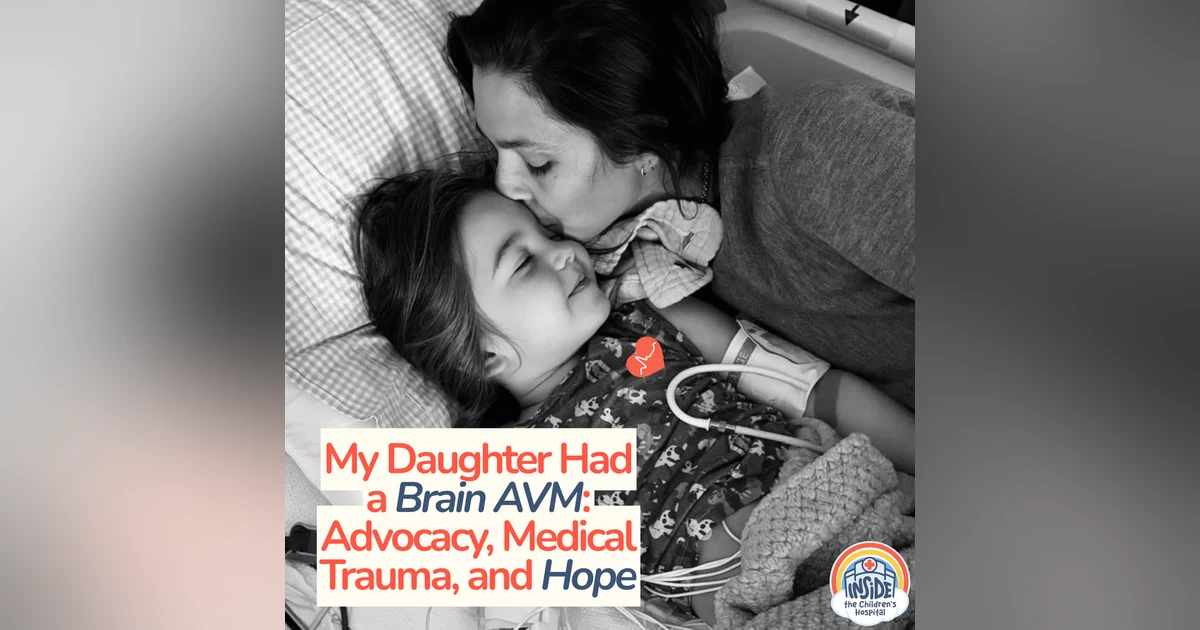


As we begin to close out NICU Awareness Month, Katie sits down with Matilda "Tilly" Aldridge, a content marketer and mom. During a normal morning, Adelaide, her oldest child, was rushed to the hospital after Tilly and her husband heard Adelaide screaming from her room. She was given a CT scan, and a large tumor was found in her brain.
Tilly recounts her experience not only dealing with the sudden occurrence of Adelaide's medical emergency, but also how Adelaide herself was able to overcome the trauma she suffered. Together, Tilly and Katie dig into what advocating for answers can entail, and finding joy in the aftermath.
Timestamps
1:40 - Introduction to Tilly's Journey
4:28 - Navigating Parenthood During COVID
7:21 - Impact of Postpartum Depression
10:41 - Life-Altering Medical Emergency
13:18 - Understanding AVIM
16:10 - The Road to Recovery
22:13 - Managing Anxiety in Children
25:17 - Empowering Children Through Choices
32:04 - The Impact of Medical Trauma
37:00 - The Search for Answers
43:57 - The Fight for Medical Attention
49:07 - The Joys of Motherhood Post-Trauma
Resources
Medical information shared in this episode is not a substitute for professional medical advice. Please consult your healthcare team for guidance specific to your child and family.
0:00 One morning, a four-year-old named Adelaide woke up and told her mom Tilly that her head was hurting. And at first to Tilly, it didn't seem like anything too extraordinary. She was just getting ready for kindergarten, talking about what she was going to wear and being completely herself. And then just minutes later, Tilly found her daughter upstairs holding her head, screaming, sweating, and unable to find her words. Within hours, Adelaide was in the hospital. And a CT scan showed bleeding in her brain. I'm Katie Taylor, a certified childlife specialist, and this is Inside the Children's Hospital, where we talk with parents about what they lived, what they learned, and what they want other families to know who are navigating similar situations.
0:43 Today, Tilly shares what happened when that completely normal morning turned into a very different kind of morning, which was an ambulance ride, a transfer, neurosurgery, and decisions she and her husband had to make before they even had time to fully process what was happening. But what stayed with me during my conversation with Tilly was what came after. We talked about a child who needs to feel safe in healthcare again and giving kids back some control after medical trauma and what it looks like to keep asking questions when as a parent you feel like there are pieces of a story that just don't quite add up. And even if your child's medical experience looks different or nothing like Adelaide's, I think there's so much here about listening to your child, advocating thoughtfully, and learning how to trust what you're noticing without letting fear make every decision for you. Here's my conversation with Telly.
1:40 I think it's so important for us to understand the whole purpose of this podcast, which is connecting parents to other parents. And there's this part of like motherhood that is like who we were before we became moms and then… Caregiver moms or healthcare advocate moms is like a whole other level. So tell us a little bit about you, Tilly, before becoming a mom and starting your family. Yeah, sure. ~ Okay, so yeah, I'm Matilda, ~ but everyone calls me Tilly. ~ And before I became a mom, ~ I would say I was like an adventure seeker. I still very much am that now, but I guess like just less like baggage.
2:21 ~ But I've always been in the marketing industry agency side. I ~ moved into like tech. world and I love my job. work in marketing content now, what we would call like go to market, working with like high performing tech sales teams. And I think like the like strongest trait that I would probably say that I possess is this like need to ~ move around. And my husband is very much the same. So I met him in Sydney, where my mum is from. And we met and we just had very similar values when it came to traveling and exploring.
3:03 And so we've always just followed opportunities. And so that led us from Sydney to Singapore, Singapore to Austin, Texas, and then most recently New York. So no rhyme, reason or structure. And everyone asks us constantly, like, so what's the plan next? And before kids, even then, it was like, we just follow wherever the opportunity lies. And so, yeah, I would say that that's probably who I... was before Mother and I'm still trying to invoke that as much as I possibly can but yeah I love socializing community is my absolute like ride or die ~ mentality whenever possible ~ and being like on the road a lot and meeting new people is ~ awesome and luckily we can kind of just like collect these people along the way and just like really build a vibrant global community.
3:57 I love that. You know, it's one of the things I didn't anticipate in starting a podcast is like the beautiful community that I'm building with people I've never actually physically met, but feel so Yeah. connected to. ~ It's one of my favorite parts too. Well, Matilda, why don't you kind of talk about your journey into parenthood and what happened when you find out that your daughter was going through something. I know a little bit of your story just ahead of time. And yeah, I can imagine it was incredibly shocking and upsetting to go through that. Yeah, ~ pretty standard introduction to parenting. I mean, outside of the fact that it was in the middle of COVID, but we were, my husband and I moved to Texas from Singapore with this intention of, we had just got married and we thought that Texas would be a great place to start a family, which it absolutely was.
4:48 It was the perfect place. We had Adelaide who is five now and ~ pretty straightforward, birth, mean outside, mean, various complications that weren't serious, ended up having a C-section, for example. And the only challenging part of having Adelaide was probably honestly just being so far away from home. We knew that that was always going to be the case living abroad, but I think the hurdle then came COVID and not having family be able to join us and you know, they hadn't seen us since the wedding and then I got pregnant and you know, I was like, no one's going to see me pregnant.
5:31 Now I look back and think like, God, I can't believe I even cared about that. at the time it felt really significant. And then, yeah, when she was born, we had no way of getting people in and we were, we were visa holders. And so it was very, it was really, everyone was very unsure if we could even leave and come back. So we were sort of tied to Texas. And I would say that from a circumstantial perspective and just, think, a natural hormonal perspective, I suffered pretty deep postpartum depression, which I sort of refused to believe for a long time. And it wasn't until my pediatrician actually was the one that was flying the flag very early. And my OB-GYN had been identifying it a lot.
6:19 Both of them would... talking to a brick wall for a while, I think. And then eventually when Adelaide was nine months, I decided to like seek help. ~ And it was like a weight lifted off my shoulders. I ended up going on medication and have like consistently been on that medication for my second pregnancy, which ~ just wildly changed the experience. And so I would say that like it ~ was a tough entry to motherhood, feeling isolated, but... ~ In general, I never felt completely out of my depth. I think I just felt this level of like consistent, like hopelessness. It was a strange feeling where I just couldn't necessarily put my finger on it. I was like, I don't not love my child. I don't not want to take care of her, but there just was this flatness to my world that I couldn't work out.
7:15 And I was looking around me at all these mothers just saying, isn't this just the most magical thing in the world? And I wasn't feeling it. And to be fair, my personality type is still, I wouldn't say the most like, ~ this is the most magical thing I was born to do this. I fully believed that that was my path in life. My mom is one of eight children. She is a mother of five. She is like this fantastic role model. And I couldn't understand how it just wasn't something I thought I was built to have thousands of children. And yeah, it just was not my path at all. ~ So that kind of like was like the beginning.
7:58 And when Adelaide turned four, my husband got an opportunity to move our family to New York. And we'd been in Texas for seven years at that point. You know, we bought a home there and we were loving it. It wasn't really something that we were like, we really need to leave. We sort of had. suspected that the next move for us as a family was likely going to be moving back to Australia to be with family as Adelaide was getting closer to elementary school. But then this opportunity came up and we just sort of were like thinking, you know, do we have one more move in us? Like, should we do this? And so we did it. And ~ I don't know, it's hard not to think that there was a reason why we did it, because it definitely wasn't the easy option.
8:44 We knew that we were going from a fairly convenient life with a backyard and a car and access to great schools. yeah, I mean, like Austin is a pretty is a dream for ~ a successful family, in my opinion. So we knew we were going to make life harder for ourselves by moving to New York. It wasn't like we were being handed an easy an easy world. And then we arrived in the summer and I put the girls into like a local summer school. And then New York works a little differently. So Adelaide was headed off to kindergarten a year earlier than she would have. She's a December baby and the cutoff in New York City goes by the calendar year rather than you have to turn five before September.
9:27 So that was, Interesting. yeah, it was a new feeling for us, but Adelaide was very mature. She's never been a super easy kid. Like she was very defiant, incredibly, like if you go to my Instagram page, like you will see that she is an incredibly... Yeah, lively person. Like she's managed to, Yeah, spirited. yes, spirited, exactly. She's managed to find her way into People Magazine at the age of five. So I mean, like my gosh, I love that. she is born for something. I don't know what it is yet, but it definitely doesn't seem like it's going to be a quiet life for her. And so when ~ we arrived, I didn't worry too much about her going to kindergarten. It made me feel a little anxious, but I knew she probably could cope.
10:11 And so off she went and then... Three weeks in, I had just started a new job. I was at Canva for a long time and then I joined Pinterest, which two fantastic brands. it was a very normal morning before kindergarten. you know, a lot of arguments over which socks she's okay with wearing. She had quite bad sensitive issues with like sensory clothing and just has a certain style that she likes. She wakes up with a vision every morning. ~ And so... she said to me, like, hey, mommy, my head is hurting. And like every mom whose child says something hurts, I honestly, this is the most embarrassing part of this.
10:52 was like, you probably need to go for a poop. Like, I just remember my mom saying to me every time, like, you probably need to go to the bathroom. Like, probably try number two and then come and talk to me. Yeah, my response is always like, have you had any water? I know, I'm like, yeah, that's a more plausible thing to say, Thank whereas my mom would always be like, you probably need it. The answer is always number two. ~ That's amazing. Anyway, so even then she was like, okay, and then she hopped upstairs to get dressed. And I mean, on the way up, she even said, was like, I'm gonna look fabulous today. I'm like, I have no doubt. And she walked into her bedroom. and then started, we heard some screaming and like very normal for her.
11:35 And so we didn't really react. And I think I went on with my day, Marina, my youngest was two at the time and she was eating breakfast. And so I was doing a lot of that. And then, yeah, she... continued screaming and it was a scream that I wasn't necessarily familiar with honestly and so my husband was like, hey, are you with her? He like poked his head around. I said, no, that doesn't sound right though, so I'm gonna go up. So I nipped upstairs and I found her on the bed holding her head. And again, I was sort of a bit confused. was like, what's going on? What's going on? And she couldn't really find her words and she was actually screaming for dad, which I knew was another sort of odd thing, not that Ross isn't.
12:21 capable of helping, but typically I am the one that she would call for in that sense. Great. And then I felt her skin, was very, ~ she was sweating and the color was changing in her face to a color that I can't really even describe. It was like a gray green is the only way I can describe it really. yeah, I asked Ross to come up. I still was a bit confused and not worried, but Ross very quickly was like, this feels something, doesn't feel right. I said, yeah, I don't think so. And the quickest way for us to get to the ER was for my husband Ross to put her in a stroller and run her up. We live three blocks from New York Presbyterian.
13:02 And so it was like, it's a Brooklyn ER hospital, which is fantastic. And so he threw her in the stroller and ran her up. I walked Marina to school and I said I'd meet them there. By the time I arrived, Ross had messaged me saying, she started vomiting. So they are going to take us for a CT scan. And I had said in my messages to him, and I look back, I'm like, make sure you push for a CT before she'd started vomiting. Because yeah, I think we both felt that there was something wrong. I honestly thought it was still a virus though at that point. Yeah. was thinking, I just read an article the night before about a flesh eating bacteria from a shrimp. And I was like, she had shrimp this week.
13:43 This is probably it. Yes. And so. I thought, okay, she'll probably be put on like an IV and she'll be back to her normal self and this will be just a blip in the road. And I arrived and she was being wheeled out of the CT area and the ER people put us into a room and said that they'll come and find us as soon as the CT results are back. we sat there with her for a while, just kind of not really knowing anything. I had texted my mom to say what had happened, but again, wasn't worried. It was only when the doctor came in and she had two people with her and ~ she introduced a child life specialist and was like this is the child life specialist she's going to stay with Adelaide while ~ I talk to mom and dad and so that's when the ER doctor took us into a different room and shared that they had found an area where they saw a lot of blood in her left temporal lobe and I think at that point Again, I didn't really know what that meant, but I think the first thing you think of is just like, well, like this is it now. She's obviously got an enormous tumor in her brain Right.
14:57 and like life is gonna be very different. And very quick to tell us that it could have been three things. She could have like hurt her head severely, but it would have needed to be a very obvious like knock, which we couldn't think of anything that had happened in the last hour and. you know, she was saying to us it needed to have been really obvious. And then second option was that it was something called an AVM, which is an abnormal connection between a vein and an artery that had led to a rupture. Or there was potentially something more sinister happening that they couldn't see, it was causing pressure, which meant that there had been a bleed.
15:41 Regardless, like the plan was that we needed to get to Cornell, which was the sister hospital to ~ Presbyterian, which was great. So they had already alerted the neuro team at Cornell. And at that point, was kind of like then they just told us what to do, which was great because at that point I just, I Yeah. didn't really know how to react or respond. didn't know what this meant in terms of time or. prognosis, we just didn't know anything. And so she's sort of said, like, Dad, you're going home, you'll pack a bag. You'll need pajamas and some clothes for both of you and like sort out childcare for your sister, her sister. And then, Mom, why don't you go in the ambulance with her?
16:27 Which, and that seemed like the best thing to do. So we did that. And we were raced across the city, which they sedated her and. ~ and gave us some anti-seizure medication to ensure that we'd get there safely. And then by the time we arrived, we went underground and the doors opened up and there was an entire team waiting for us already. It was so scarily organized that it just, yeah, it was both simultaneously reassuring and also ~ just like an incredibly... stark insight to how serious this was. they took us straight to another scan.
17:11 They did an MRI this time with contrast or an MRA. can't quite remember the naming conventions to make sure that there had been no additional bleeding since we left the previous hospital. And it seemed as though she was stable. And so they decided to keep her overnight before they did an angiogram, which was going to be the first is the first thing that you do to explore something in the brain. We were given a child life specialist who was really fantastic, able to sort of walk me through everything that was happening ~ and she just didn't leave my side. And for the first like four hours, she really sat with me, just helping me understand.
17:51 This is a teaching hospital, so the staff were huge. Yeah. That was a massive staff. And then it was a waiting game, honestly. It was like the next day we had to wait for our angiogram appointment. within that time I was having calls with the social worker. The neurosurgeon had told us that they were pretty confident it was an AVM and nothing else. And that was both like good and bad in that like she's stable. She is showing signs. She was lucid, but very... slow, but both had, she had, she had function in both hands and she was able to talk when you talk to her, she seemed to have like cognitive function.
18:37 So they knew that, that she was right now, it had not caused any damage where it, where was any swelling in the brain. And so we were just on like a 24 hour watch to make sure that it didn't look like there was additional bleeding, that it started to bleed again, which would then have then meant that we would have had to have had an emergency craniotomy. So, we went in for the angiogram, which I didn't realize was as sort of serious as it was. was, you know, she goes to sleep for, ~ like, she went, well, in the end, she was asleep for four and a half, five hours, and they put something into your groin, go up into, and they watch the contrast and the flow of the blood to see how severe this is.
19:22 there are kind of an AVM is a very large tangle of capillaries between a vein and an artery and vein being a low pressure hose and ~ artery being high pressure and so Yeah. when those capillaries get tangled it can create a swelling of sorts and then it ruptures. You're born with it likely, there's a likelihood that you are it's just unfortunately a malformation that happens at birth that Some people live with their entire lives and you wouldn't know, it wouldn't have ruptured because your body is able to kind of the blood through. Unfortunately Adelaide's wasn't and it was going to have ruptured at some point.
20:04 We were very lucky that it ruptured. Adelaide fell into this like 1 % chance of everything that we went through. They Wow. unenrolled her from school. They told us that we would need to find an apartment close to the hospital and so... Yeah, it was a very big 24 hours where we were trying to work out like how our life was going to continue operating. But then I had this like deep feeling that also this is why we were in New York. This is why we were pulled to New York. I am, you know, was born a Catholic. I am, I, but I wouldn't say I'm practicing and, it felt very hard not to believe that there was something else looking out Yeah.
20:47 for us at that point. It was really a very strange feeling. So yeah, mean, then it kind of shifted overnight, which was that they did the angiogram and then halfway through the surgeon, the pediatric intravascular neurosurgeon, which I didn't realize is like so many layers deep when it comes to specialization. Yeah. There's like a pediatrician, then there's a neurosurgeon who is a pediatrician, then there's an intravascular, like it just, there's so many layers. Yeah, and you're just so grateful that they have that specific expertise. I mean, I just couldn't believe it. And they were like, this is the person, this is the best person in the world, Dr. Justin Schwartz. And I will Wow. remember his name forever. And he came out and was like, this is actually a much simpler connection than we thought it was going to be.
21:35 It looks like a direct connection. So there is only really a few areas where the blood is flowing through. We think rather than a craniotomy, which was originally the plan. Originally they had said it was probably going to be a series of angiograms to block off some areas of blood flow and then a craniotomy to remove the tangle. But it looked like they could fix it there and then. And that was a hard, was simultaneously fantastic, but also really hard to know because we had to make a decision in that moment when he came out and he's scrubbed up. And at the same time, they had previously told us that there are three ways to fix this.
22:17 You block it with glue, which is not recommended because it's not necessarily the strongest way to hold. There is ~ radiation, which again, not super recommended. ~ And then there's a craniotomy, which is the way it will be cured. So for them to then come out halfway through and say, actually, option one is okay. suddenly I'm asking these questions like, but you said it wasn't the right thing. And he's like, that was when we thought it was a true AVM, a huge tangle of capillaries. This is an AVF, which still considered an AVM, but it's a direct connection versus a tangle. And of course nothing's linear. There's no perfect description for one thing or the other when it comes to the human body. So we had to trust him and they fixed it.
23:03 They put three metal coils into various like areas to stop blood flow. And then they filled it with something called Onyx, which is this medical grade glue. And then she came out and it was about a week's worth of recovery. So we went from thinking that this was a six month process where we were going to be recovering hugely and she was gonna have to be enrolled in hospital school and our lives were gonna have shifted. I had just started a new job and so I was having to tell Yeah. my work that, my life might look a little different moving forward to... okay, she might be able to be discharged by the end of this week and hard to believe, but it happened and she is now an incredibly healthy, happy kid.
23:50 we just had our two weeks ago, we just had her for her six month MRI, MRI with contrast. And it's like looking like it's holding and there's no shunting, which means there's no blood pooling or blood flow Right. in the area. And so we've been given another year of sort of safety, I suppose, before we have to have another MRI, MRA. And then six months after that, we will have another angiogram, which will really kind of make sure that we're looking good, which will give us like a, another five year gap, all being well. So yeah, I mean, we've kind of reached this point now where we can take a breath, which is great. I'll stop there. Yeah. Right. my goodness.
24:30 I've just like unloaded an entire. No, I have just so many thoughts and questions. One is about ~ how unbelievably strong and well-spoken you are, like just picturing you're thrown into this, that full 24 hours. And one of the things I always think is miraculous is these incredible decisions you have to make with such little information at your lowest capacity possible, which is like Yeah. overwhelmed, exhausted, not eaten, completely threatened, like... and you're making one of the biggest decisions of your life about saying yes or no to things. ~ Yeah. I'm interested now because you're six months out. What does she remember and how do you guys reflect on what happened together?
25:13 She remembers a lot. That's my biggest focus right now, I would Yeah. say, is managing her ~ ability to... I'm just gonna make sure. I'm Yeah, okay. just gonna... got somebody's... I'm gonna shut this app down because it's buzzing and it's distracting me. Yes, that is my biggest focus right now. She's very aware of what happened. She recalls everything from arriving in the hospital onwards in Cornell. She doesn't recall it happening and the actual episode, ~ which I'm grateful for because the doctors really talk about how painful that would have been.
26:06 Yeah, just the idea that your child is in that much agony, just not a pain that an adult could withstand, let alone a four-year-old. ~ She's anxious and it doesn't show up in high anxiety situations. I'm not seeing it in, ~ just she's not able to tell me that she's anxious in many ways, but I see it. If there is something... on her body that is, ~ I know, a splinter. And I know kids are very sensitive to things like that. ~ she responds in a different way, which is that if I say to my husband Ross, I'm like, looks like Adelaide's got like a stye.
26:51 She's like, don't talk about that. Do not, she doesn't want me to talk about it. Whereas typically I would remember her before really kind of like leaning into the hypochondria. Like, like. Like, my God, like what's happening? I need a cast. Is it so good? Yes, yeah, my God, like do I need a bandaid over my eye? We should probably get an eye patch. Now it's like, don't, no, nothing is wrong. Nothing is wrong. You will not talk about that. I do not want you to tell anyone about anything. Like it's almost like, no, this is not happening. And it's a really obvious shift between the way kids behave about trauma. She will not. She does not like addressing it. And we were in Costa Rica for the spring break a couple of weeks ago and she split her chin open and ended up having to have stitches, which when it puts into perspective, when you're a medical parent, not like we are, we're like, it's fine.
27:46 Yeah, yeah. And when we went back to school, I was like, gosh, you're gonna have to show everybody your stitches and how brave you were. And she just was like, no, I don't need to tell anyone. She's like, no, I don't want anyone to see those. It's like she just wants to be completely dissociated with anything medical. And ~ the scan, ~ the best thing that we have found is to, know, some kids really prefer not to be given information upfront. In advance, some people, some kids or parents know that it's better off they don't share information with their child in advance, or they should share it just before, depending on how they respond to it.
28:29 It's a really tough line to know where to sit because Adelaide is not good with last minute preparation. also think it drives, for Adelaide specifically, it drives a level of mistrust with me. At the same time, I don't want to tell her too early so that she's just living in anxiety. So we try and find that balance where you feel, okay, she has enough time to process it, ask me questions, and I will spend. three to five days just reassuring her deeply that she is safe and ~ that she is allowed to feel all of those scary thoughts. Cause it is scary and not gaslight her into thinking she's crazy, which we can very much do, which I have done in the past with splinters.
29:15 I'm like, this isn't gonna hurt. I'm like, Yeah. I know it's gonna hurt. So yeah. For sure. It's such a slippery slope because yeah, every child is going to react different, especially based on what they've been through. ~ One strategy that can sometimes be helpful too is giving her the choice of being like, okay, there's something happening next Friday that I want you to know about because it's at the hospital, but I'm going to tell you everything you need to know and then nothing more. Do you want me to tell you today or tomorrow? And just those small little choices. like, because kids are... Yes, is. Yeah, that is exactly right. Kids can be so good at actually telling us what they need when they need it. ~ and you'd be surprised at their choices as well sometimes.
29:56 Well, this is so wild. So my daughter is eight and we've done the dreaded thing of like being with her until she fell asleep from the time, like she did it until she was three and then it got cute one night and then stuff got real. And I'm like, hey girl, you're going to have to fall asleep on your own. I was like, what would make you feel safe falling asleep alone? And she was like, can we put the camera back in my room so I know y'all can see me? And I was like, that's the easiest thing. And I was like, yeah. So we put the camera back in, she's fallen asleep on her own. And I'm just like, all you have to do sometimes is ask and they're gonna create what Yeah, was they need. 100 % you just have to kind of sometimes explain it to them and let them, yeah, I learned that as I learned that honestly through that time really like we had a sharp learning curve even when we had her scan recently she was asking a lot how they were gonna put her to sleep.
30:51 That was definitely the biggest traumatic moment for her is this lack of control over who is putting her to sleep. The idea that she isn't in control of her body, think for her at that point really freaked her out. And she remembered it very well from this surgery. So when we went back for the MRI, recently she was very vocal about like, are they going to do it? And when we got there and we spoke to the nurse about it, it was very clear that like she could have a choice. We could put a mask over her face or we could put a shot in it. We could do an IV. And I was thinking, like, there's no way she's gonna want the IV.
31:31 And immediately she was like, I want the IV. I'm gonna be like, you know, that's a needle, right? She was like, yes, I do not want anything on my face. I don't want anyone to hold anything on my face, I was like, if you want the IV, I'm okay with that. And she was like, I do, I want the IV, that is better for me. And I was like, great. I was Good for her to like advocate for herself. like, and then my head, was like, my heart was breaking slightly. And I was like, God, a child that would prefer to have. a needle stuck into her arm or hand over a face mark is a sign of a child that has been through some and through some stuff, Yeah. shit. Yeah. Honestly, the smell of the sevoflumarine alone can be just really triggering. Perhaps that's honestly it. Yeah, Yeah. ~ perhaps that's it. Yeah.
32:16 The medical smells in general are quite unbelievable. don't, if anyone has experienced the smell of onyx before, some people I don't think have a gene that can smell it. But when she came out of surgery, obviously as a mother, all you want to do is like get into the bed with them and just like hold them. Yeah. Yeah. And when I tell you... She smelled so bad. Yeah. I could not cope. I kept getting closer and being like, I can't kiss her. She smells so awful. What is that? That's the onyx. I was like, what is that? Wow. And it was seeping out of everywhere. was like, isn't it in her brain? They said, yeah, but it comes out through her nose, through her mouth, like through her pores.
32:58 I honestly, I couldn't be near her. It was so awful. So yeah. ~ my gosh. One of the things you said at the beginning of this was how important community is to you. Have you connected with other parents who have gone through something like this? like, obviously like after you were in fight or flight and like needing to be there for those seven days, were you like, did this happen to anybody else? Immediately afterwards, my child life specialist did connect me with a woman who had been through something similar. And I am incredibly embarrassed and ashamed to say that I didn't end up joining the call. And ~ I think that was out of, I probably scheduled it too close.
33:45 And ~ yeah, I just don't think my body was ready to even address. I think you did the smart thing. No shame here. If you can't do it, you Okay, well. can't do it. And you know what? That mom more than anybody understands. I hope so. I I also felt a level of ~ survivor's guilt, I think, because ~ I did join Facebook groups that showcased ~ a lot of parents who have been through the same thing. It wasn't even parents. There's not really parents, actually. It was more like people who have been through the same thing. It's not that common for children to have this. Like, five is quite early for it to rupture.
34:27 I mean, a lot of the people that I came across were much older who had had it ruptured. Sometimes it can take a really long time for a ~ vein to withstand it, the amount of blood flow. So I couldn't really find many people that had kids that had had this. And the ones that I did see online, it was too hard for me to even look at them because it f- We were so lucky, you know, that the brain is a slow repairing organ. It is not an easy place to access a lot of the time.
35:10 If not, the majority have ended up with long term. like challenges and abilities, or they didn't make it. So I am acutely aware of how lucky we are as parents. And especially when you live on them, pick you for long enough, you see families come and go with good news and really bad news. And I think once I joined those Facebook groups, I realized it wasn't a healthy place for me to be. and perhaps in a year's time I will rejoin and find more of a support network to have children that are recovering from say medical anxiety, rather than it being specific to AVMs because AVMs are such a...
36:03 I mean, yeah, it's not that you don't get that lucky with these. Yeah, yeah, there's a full spectrum of what it can look like after. So yeah, unfortunately, there's not that many parents that have the ability to say this. But if there is anyone out there that wants to talk, Well, I love that that's and... why you're doing it because you're so worthy of that support too. But I completely understand like not wanting to be there and maybe it never will be at a time and that's okay too. Yeah, I think, no, no, you go. Tilly, yeah, go ahead. No, no, you go. Well, I think that post the ~ ordeal, she began to get nosebleeds as well, which I don't know if I mentioned that, but she started to show ~ these sort of spontaneous nosebleeds.
36:54 And of course, like after brain surgery, if you spot a nosebleed, you panic. And so... I spoke to her neurosurgeon who mentioned that it really wasn't something that he was concerned about. And I then began to think nothing of it. I trusted him and then, and I still do, I wanna make that very clear. She did continue to get nosebleeds, however, and they seem to be getting kind of like more frequent than they were infrequent. And then I thought back and I was like, she was a pretty nosebleedy kid. That's unusual. And I did what every parent should not do when you've been through medical trauma, and I Googled. And I do not recommend Dr.
37:36 Google. However, if you do end up in that world, which is inevitable, unfortunately, all parents do, you try and gather information from everywhere you can. And podcasts were my second area where I started to look, because I came across this potential diagnosis, was called HHT, which was hemorrhagic. In fact, I've written it down here because I knew I be able to say it. Here we go. Hereditary hemorrhagic telangiectasia, which is a mouthful. And ~ it's a genetic, I suppose it's like a genetic disease, I suppose, a genetic disorder, it would be called. ~ which there are sort of four symptoms that are categorized under this like for like a potential diagnosis or ~ test, which was nosebleeds, an AVM, these basically visible capillaries on her skin. And then there's one more, which is family history. And.
38:54 Whilst we had family history of stroke, which definitely fell into that world, none of the strokes were before the age of 65, and so they're considered pretty ~ unfortunate but normal. However, with the nosebleeds and the AVM, and she did have and does have ~ visible capillaries on her cheeks, which I have always seen from a young age and thought, well, she's just, they're pretty normal. ~ And so I began to do my homework and I really pushed the neuro again and I asked and asked and asked for a referral and it was very difficult to get through to them. You know, they're moving on to patients that are more emergent and that is the right thing to do. I won't fault anyone for that.
39:36 Doctors, particularly surgeons like that, neurosurgeons need to focus on what is right in front of them and I would want that for my own child. So I don't fault them there for this. However, like it took a lot for me to get where I needed to. I needed to switch pediatricians because they were not taking my like asks seriously. I ended up listening to a podcast of a person who worked in an HHT excellence center. And I found that particular doctor on Instagram. I messaged him on Instagram. I sent him all my gosh, you're amazing. of Adelaide's papers. And I said, like, is this worth me looking at? Do you think I'm crazy?
40:17 I know that parents, promise I'm not like trying to make her sick. don't want her to have this. I just wanna make sure I'm not missing anything. And then he reached back out and said, yes, you definitely need to have a diagnosis or at least like a review. But based on my assumption, even if you didn't come back with a genetic, a positive genetic diagnosis, you would meet their criteria for a clinical diagnosis, which is when you... tick enough boxes in order for you to say it is likely that you have this, however it's not showing up in your tests, likely because we haven't actually uncovered that many variations at this point and like over years and years and years as we do more research more variations will become apparent and we will be able to do a better job of diagnosing them from a genetic standpoint and these like variations between chromosomes.
41:11 So he got me a appointment with the HHT Excellence Center. We had eventually gotten through to the people we needed to, but the appointment wasn't gonna be until like June and they shifted this man, this amazing man from Maryland, shifted our appointment up to April and we had everything done. had all of the tests. She did not come back positive, which... Honestly, I was devastated. I felt ~ furious and nobody could understand why I was furious. And it was purely because I couldn't understand why she was continuously having nosebleeds and she had had the AVM.
41:52 I could see these capillaries on her skin. It made no sense to me. And the reason I wanted the diagnosis is it puts us in a category where scans are covered by insurance. So additional monitoring ~ would have been covered and ~ Yeah, it made me furious and I didn't understand. And the geneticist we saw was wonderful, but he didn't feel as though we did meet enough criteria to meet a clinical diagnosis. And so our genetics counselor said she would do everything she possibly could, but yeah, if without those like three box ticked, we don't really qualify. However, three weeks later, this beautiful genetics counselor had called every person in her phone book and the pediatric head of the HHT Excellence Center as part of Columbia reached out and said, no, she does qualify. I do not want you to walk away not thinking that we will look into this because we just do not know enough about this disorder. 11 % of...
43:03 people come back with no diagnosis. We were amazed that she didn't come back with a diagnosis, which means that like she probably does have something that we just don't know yet. Yeah. And so now we have access to the HHT Excellence Center ~ for resourcing. And I think it did help that the day we went to the genetics testing, Adelaide was nose bleeding all over the surgery, all over the place. was like, I was in tears. was like, Wait, wait. What do you mean she doesn't qualify for a clinical diagnosis? usually kids show up and it's like they've had a fever for five days and they're like, I'm totally fine. But she was performing. I know. It gave me real leverage. She was ready.
43:46 Tilly, what does it feel like to have to, I don't know if fight's the right word. What does it feel like to have to be the consistent squeaky wheel? Simultaneously empowering as a mother, you are on a fight and just deeply disappointed ~ in the system. mean, I'm no stranger to complex. medical systems. I'm from the UK. have free medicals. We have access to free medical care, which I am a huge advocate of, but it does not come with easy processes. My mum is my mother has has ulcerative colitis and it took her years to get to a diagnosis.
44:32 And that's purely just because it it's a it's a queuing situation. You line up and you wait your turn. Right. Yeah. And it unfortunately like that is the not helpful for cancer or more than that, you know? And so the benefit of America is that yes, we have health insurance. However, that really only helps people with the means to have that, which means money. And I knew that at the end of the day, we could afford to access a scan should I want it and pay for it. But it made me feel a little bit like I was. I don't know, there was an element of, am I like willing her to be sick?
45:16 Do I want her to be sick? Like is this, and I thought that that's what people thought around me as well, my husband even. think I was anxious that he thought I was searching for something that didn't exist. I know that there's a, can't even remember the name of that. Like what is it called? Okay, good. I know, I don't like saying it, but it's monthosomes, right? Yeah. Yeah, and I did consider that. Yeah. I did consider like, is this a munchausen situation? Am I like? willing her to be sick so I can take care of her. I don't know. ultimately, I began to write it down to be like, let me just put the facts down on paper. And it just felt undeniable. I just was like, So smart. Yeah, so smart.
45:57 no. This is what I've been told. This is the symptoms that she has. What happens if the alternative is I don't do this? And... she has another AVM and because it wasn't covered or it wasn't, I wasn't on top of it, I missed it. Yeah. And next time she won't be so lucky. And I remember saying to the genetics counselor in there when they said, look, we don't, let's see what the test results come back with, but we don't think that she qualifies for a clinical diagnosis. And I began to cry ~ in the office and Adelaide was with me. She had to be with me, which was...
46:37 I did not feel proud of that because I don't, I know it's important for them to see your emotions, but I didn't want her to feel scared was the biggest part of Yeah. it. And ~ I don't know, I got kind of angry and said to them, I guess I just like, don't know how you would let me walk out of here seeing her nose bleeding, knowing that she's had a ruptured AVM, me showing you these things on her skin, which you think is just because she's got pale skin. Whereas I know that that's not the case. Right. and in five years time, her to have another AVM which ruptures and kills her. And they found that so confronting when I said that they were sort of like almost like tapping words and doing like, no, no, no, no, like that's, we don't want that.
47:23 And I was like, I'm not saying that you want that, but I'm saying that that's what's, Right. That's where you're leaving me. yeah. Yeah. And I honestly think that that might've been the reason why the genetics counselor worked so hard for me. And so all I could say to any parent is, Write it down in the, like write down the facts. Talk to somebody if it's a therapist, if you need to have like a sound of mind person to try and like unpack this. Bring in like credible evidence and make a choice as to whether you should push. And I don't know if I should, I would say trust your gut. I don't know if I necessarily believe the gut trusting because I've lived a world where after having a baby, sometimes your hormones do things that tell your gut that something is not, that is not correct. And so I'm not necessarily a believer of that, but I do believe that there is a merit to writing down what is 100 % objective and what that means.
48:27 And if you're still feeling uncomfortable, even if it's all signs point to safety, once you've ruled out everything, then maybe it is worth looking for help and from a psychological safety perspective and an anxiety perspective. I don't know enough about this world to know when you stop and you draw the line on looking for answers. I don't know. love that response. I've never heard that before, but I really like it. Tilly, one of my favorite questions when we close is just hearing some of your favorite parts of being Adelaide's mom. What you love about it.
49:07 my goodness, well, my life now exists before and after the AVM and... I will say that Adelaide is a different kid to when after this in a good way, which is wild. Yes, she has a level of medical anxiety that I am trying very hard to get on top of. I'm also advocating for her to repeat kindergarten, which if the girl wasn't doing so well, it would be a lot easier. Me trying to explain to the school, I know she's succeeding, but I don't know if it's the right thing for her. Yeah. You know, I think back to all of those times before, and she could very well have just been a difficult four, three, two, one year old, but there is a level of patience that that child has now walked into. And I have spoken to doctors that say, you know, kids with AVMs that hadn't ruptured could have lived with a headache for a lot of their lives without really knowing what it was or able to tell me what it was. But there could have been a level of, I suppose, like irritability that reduces her patience.
50:18 And I would be lying if I said that Adelaide and I had a really strong connection up until her AVM. And having that episode, even if she had been the same exact person afterwards, it rewired us as a mother and daughter. And I have a connection with her that is so... deep that I never thought I would reach and I only potentially had with my youngest daughter and I am not ashamed to say that. I, that is a chemical situation that I went through where I, I did not bond with Adelaide and I did not, she did not have an ounce of breast milk and Marina received all the things that mothers are meant to receive, that give their children because of that hormone imbalance.
51:01 so that is just like context for like how fantastic my relationship with this, with is now and so like I want to reassure parents out there that feel that way like there are ways to reach that level of connection again it doesn't necessarily have to happen in the form of AVM but it is possible this child is amazing I got there there's really only the way I can explain it she's she is the absolute she's taken all the best parts of both Ross and I and left all of the worst parts behind. Yes. She has like the deepest empathy of anyone I know.
51:43 She is the most inquisitive child and she has been through it all. She had the worst stranger danger of anyone I know and now she is like the mayor of Park Slope, Brooklyn. Yeah If anybody knows that, she's managed to cement herself in every community. She is like well loved in the Jewish community in a way that I'm like. she's obviously gonna convert. This feels so Yes. funny. if anyone again, like, if she hasn't seen my Instagram page, she went viral for crying over not being Jewish and not being able to celebrate Hanukkah, which of course now we have like as part of our repertoire. And course. I will not tell her that we actually like, my family is like probably Jewish. Like I think we're from like the Ashkenazi Jew, like descendants. And so I'm sure like there is a much easier route for her, but.
52:29 Yeah, I just, I'm continuously blown away and surprised by her strength and willingness to do things. I think as mothers, we underestimate these children so much. And actually it's okay if they fail at something. It's okay if they don't want to do something. Don't be disheartened because like you might turn a corner of something different and you find herself, like Adelaide wouldn't put shoes on for the first like, I don't know, four years of her life. And then suddenly last year, over Christmas, she's putting ice skates on and she's skating. the idea that I would ever have been able to even put a toe in an ice skate is just wild to me. And so I think just this resilience that that child has, that's what I love. I love her inquisitive nature and her deep love for people.
53:18 I love that. I want her, my love language is gift giving and generosity. I used to be more gift giving with my time and like now I think I have a very busy life with work and these kids. So now I try and be more of just an actual physical gift giver and hopefully one day my time will come back again. But I hope that I can continue to foster that in her and I'm already seeing it. And when you see those amazing like qualities that you wish your child had start to exist beyond you telling them to do that is just like the proudest moment and I'm seeing it every day. Marina, her younger sister, has a way to go.
53:58 I will say that. I love it. I feel like she's just going to keep surprising you like at every turn. actually I think so. when you were saying that her AVM experience, she was in the 1 % the whole time, it's just like a testament to like she's going to keep you on your toes in a really beautiful way. She is. She's wonderful and I feel so lucky in so many senses of the word and I just don't take that word for granted. I know we throw it around a lot, but my whole world has been built around luck this year and it's kind of undeniable. As somebody, I was talking to my husband the other day once a long time ago, this woman called Jo Theresa, who was my manager in Singapore, an agency. I will say she was an absolute nightmare and she will agree with me here.
54:45 But she asked me an interview question, do you believe in destiny or the free world? And I didn't really understand the question when she asked me that. And it has been a question that I have continuously asked myself over the last year, particularly and before. And it's this idea of, you believe that you are in control of your fate or do you believe that there is a wider, there is a larger purpose that, and I, up until Adelaide's diagnosis and Adelaide's, trauma, I have always been a believer of the free world. believed, no, I am absolutely in control. And to a certain extent, we do have a level of control that we can generate.
55:28 However, whether you're religious or not, there are ways that you can't explain. There are just inexplicable reasons that things happen. this felt very much like one of them. And I can point to other points in my life where it feels that way too. And I think back to that interview question and how differently I'd respond now. And yeah, I don't know. Wow, I love that question. I've never heard that before, but I like that. I wonder how a lot of medical parents would answer that if they would do it similarly. Yeah, exactly. And you know, it's a hard one because we are living in a world right now where we trust, we want to trust science as a, a, you know, as a mother, I am a big believer in vaccines and science and all the rest of it. And at the same time, you can't help sometimes, but wonder like, there must be a reason as to why things happen and why things don't happen that is out of our control. So it's like a real juxtaposition in the medical world.
56:29 So. Yeah, there can be space for both. I agree. Well, you mentioned a couple of times your Instagram. Where can people follow along with you? Oh yes, yeah, if you do feel inclined to follow... And you should because she's hilarious and adorable and I love everything about it. I will say it's not a cutesy lovely like, love my children so much. Like sometimes I'll post that, but most of the time I'm just posting about how challenging parenting is. So I don't want to give anyone a false sense of like, this is going to be the most like wholesome place because it's mostly me just trolling my children. And eventually it will get to a point where they say, thank you very much. I don't want to be on camera anymore, but right now Adelaide's really loving the attention.
57:11 love it. And it's, I'm just Tilly Aldridge, at Tilly Aldridge on Instagram. Yeah, you'll find me there. Perfect. And then do you have a Pinterest board we need to follow? my God, I have a thousand Pinterest boards. Okay, okay, yeah. Right now I'm again, I'm Tilly Aldridge on Pinterest. Okay, great. And right now my world is about trying to find outfits with clothes that I own. So I type into Pinterest, like outfits for. a Brooklyn mom going to work in tech. Like you can be as specific as that now and Pinterest and I'm not here to like shout out Pinterest, but it will pop up all of these amazing like outfits where I'm like, okay, I have jeans sort of like that.
57:56 I have a shirt almost like that. And you can kind of piece together things that you already own. And I'm really trying to make a good idea. use of, yeah, I'm really trying to make use of what I already have rather than just buying a coat. I need to do my child life podcaster from Austin, Texas who sits in our office all day. I need to find that one. Yes, please do. do. mean, look, comfort and style. Yeah. It's so, I love it. Tilly, so wonderful to meet you. Thank you for being here. so nice to see you. And yeah, thank you so much for having me. And if anyone out there would like to chat, like they are very welcome to reach out. am always here. Awesome. Thank you. Before you go, if this story taught you something, made you feel less alone, or helped you better understand what families experience in pediatric healthcare, would you help us by passing it forward?
58:41 Podcasts like this grow because people share them. Send an episode to a friend, a neighbor, another parent, or share it with a Facebook group or community where you think someone might need to hear it. And if you haven't already, follow the show and leave us a review. it helps more families find these stories and learn from the parents who have walked this path before. Thank you so much for listening to Inside the Children's Hospital. We'll see you next time.

